
Implant Treatment
Implant Treatment
A modern treatment option for replacing missing teeth with stable, natural-looking restorations that support chewing comfort.
Overview
A reliable long-term solution for missing teeth
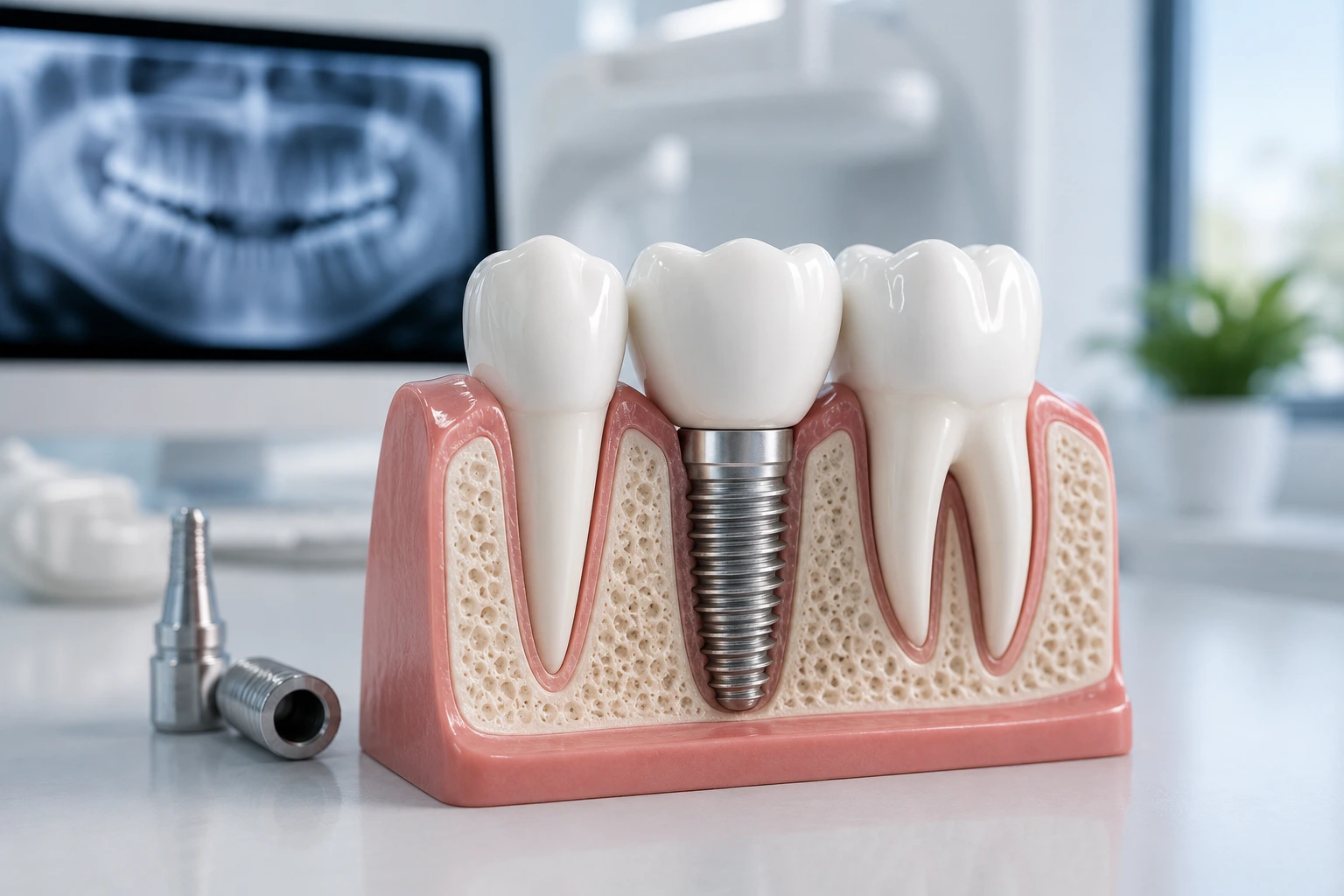
Implant treatment replaces missing teeth with fixed restorations supported by titanium implants placed into the jawbone. The goal is not only to close the empty space, but also to restore chewing strength, speech comfort, facial support, and smile aesthetics. When properly planned, implants can provide a level of comfort close to natural teeth and help patients smile with greater confidence.
Suitability
Who is it suitable for?
People with one or more missing teeth
Patients who have difficulty chewing because of missing teeth
Those who do not want removable dentures and prefer a fixed solution
People who feel less confident speaking, smiling, or eating due to tooth loss
Patients with suitable jawbone and gum health for implant placement
Those looking for a long-term, aesthetic, and functional tooth replacement option
Treatment Process
How does the treatment process work?
Detailed examination
The mouth is examined carefully. The missing tooth area, gum health, bite relationship, and general oral condition are evaluated.
Imaging and bone assessment
X-rays or, when needed, tomography are used to assess the volume, density, and suitability of the jawbone for implant placement.
Personalized planning
The number of implants, their position, and the type of final restoration are planned according to the patient’s needs.
Implant placement
The implant is placed into the jawbone under local anesthesia. The procedure is usually completed in a controlled and comfortable way.
Healing and bone integration
A healing period is needed for the implant to integrate with the jawbone. This period may vary depending on the person’s bone structure and treatment plan.
Final tooth restoration
After healing, an aesthetic and functional restoration is prepared over the implant. Tooth color, shape, and bite harmony are carefully checked.
Final check and care guidance
Once treatment is completed, comfort, appearance, and chewing function are reviewed. Care instructions are shared for long-term use.
Benefits
Benefits of implant treatment
Provides a fixed and comfortable solution for missing teeth.
Can offer a chewing sensation close to natural teeth.
Supports smile aesthetics and facial appearance.
May feel more secure and comfortable than removable dentures.
Can replace a missing tooth without cutting neighboring healthy teeth.
Can be used for many years with proper care and regular check-ups.
May create a more natural feeling while speaking and smiling.
Q / A
Frequently asked questions
Is implant treatment painful?
Implant placement is usually performed under local anesthesia, so pain is not expected during the procedure. Mild sensitivity, swelling, or pressure may occur afterward, and these are usually managed with the dentist’s recommendations.
Can everyone have dental implants?
Jawbone structure, gum health, and general health condition need to be evaluated first. Some patients have enough bone support, while others may need additional preparation before implant treatment.
How long does implant treatment take?
The duration varies from person to person. Implant placement itself may be completed in a short time, but a healing period is usually needed for the implant to integrate with the bone.
Will the implant tooth look natural?
When the final restoration is planned correctly, the implant-supported tooth can look harmonious with natural teeth in color and shape. The result depends on implant position, gum structure, and prosthetic design.
How should implants be cared for?
Implants need regular care just like natural teeth. Daily brushing, interdental cleaning, and regular dental check-ups are important for long-term use.
Can an implant be placed immediately after tooth extraction?
In some cases, an implant can be placed during the same appointment as the extraction. This depends on bone condition, infection status, and the overall treatment plan.