
Periodontology
Periodontology
A dental specialty focused on diagnosing and treating gum disease, supporting bone tissue, and the surrounding structures that affect oral health.
Overview
Healthy gums are the foundation of healthy teeth
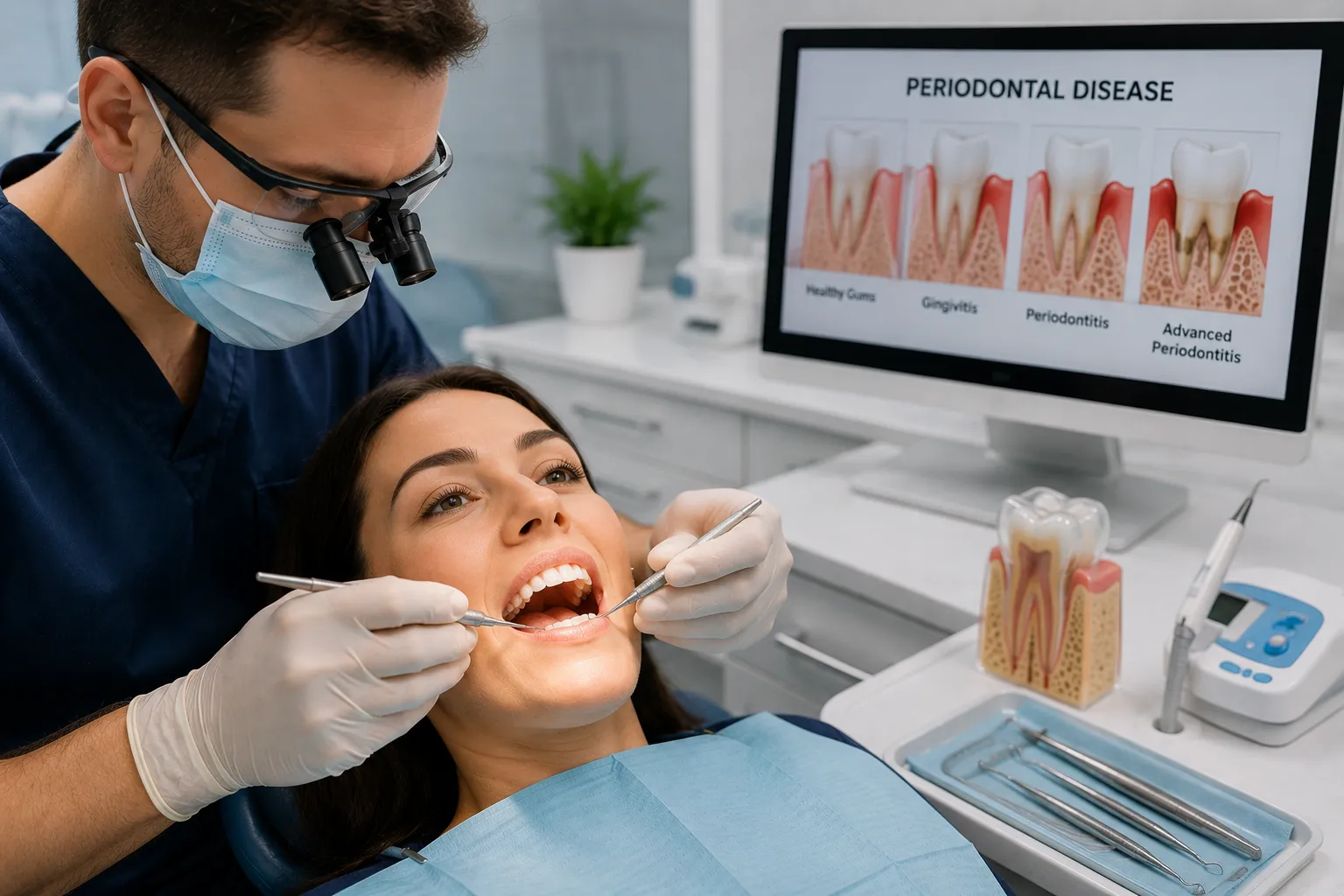
Periodontology focuses on the gums and the supporting tissues around the teeth. Gum bleeding, redness, swelling, gum recession, bad breath, tooth mobility, or tartar buildup are all evaluated within this field. Gum disease can sometimes progress silently; bone loss and weakened tooth support may develop even without pain. That is why early diagnosis, regular cleaning, and personalized oral care habits are essential for long-term oral health.
Suitability
Who is it suitable for?
People who experience gum bleeding
Patients with redness, swelling, or sensitivity in the gums
Those who notice gum recession or exposed tooth roots
People with bad breath, unpleasant taste, or frequent plaque buildup
Patients who need regular professional tartar cleaning
Those who notice tooth mobility, shifting, or spacing between teeth
Patients who need gum and bone health evaluation before implant treatment
People who want to protect their natural teeth by maintaining healthy gums
Treatment Process
How does periodontal treatment work?
Gum examination
Gum color, bleeding, recession level, tartar buildup, and the supporting tissues around the teeth are carefully evaluated.
Pocket measurement and tissue assessment
Gum pockets are measured to understand the depth of the disease. When needed, bone support is evaluated with X-rays.
Tartar and plaque removal
Plaque and tartar buildup around the teeth and gumline are removed. This step forms the basis of gum healing.
Deep cleaning plan
If gum disease is more advanced, root surface cleaning and more detailed cleaning below the gumline may be needed.
Oral care guidance
Brushing technique, interdental brushes, dental floss, or oral irrigators are explained according to the patient’s needs.
Healing follow-up
After treatment, gum bleeding, swelling, and pocket depths are monitored. Additional treatment may be needed depending on healing.
Maintenance phase
Because gum disease can recur, regular check-ups and professional cleaning intervals are planned individually.
Benefits
Benefits of gum treatment
May help reduce gum bleeding, swelling, and sensitivity.
Supports the protection of bone and tissues that hold the teeth in place.
Helps control tartar and plaque buildup.
Can contribute to reducing bad breath and unpleasant taste.
May slow the progression of gum recession and tooth mobility.
Creates a healthier foundation before implant, aesthetic, or prosthetic treatments.
Supports long-term preservation of natural teeth.
Makes daily oral hygiene more effective through personalized care guidance.
Q / A
Frequently asked questions
Is gum bleeding normal?
Gum bleeding is generally not considered normal. Bleeding while brushing may be a sign of gum inflammation or plaque buildup. If it continues regularly, it should be evaluated by a dentist.
Does tartar cleaning damage the teeth?
Professional tartar cleaning does not damage the teeth. On the contrary, it helps protect gum health and reduce plaque accumulation.
Can gum recession be reversed?
The cause and level of gum recession are important. In some cases, progression can be stopped or aesthetic/surgical options may be considered. Early evaluation is important.
Does gum disease cause pain?
Not always. Gum disease can progress silently with signs such as bleeding, bad breath, gum recession, or tooth mobility, even without significant pain.
How long does periodontal treatment take?
The duration depends on the severity of the disease. Simple cleaning may be completed in one visit, while advanced gum disease may require several sessions and regular follow-up.
Can gum disease come back?
Yes. If oral care is insufficient or regular check-ups are missed, gum disease can recur. Maintenance care and personalized hygiene habits are important after treatment.
Is gum health important before implant treatment?
Yes. Gum and bone health are very important for implant treatment. Healthy surrounding tissues are one of the key factors supporting long-term implant success.