
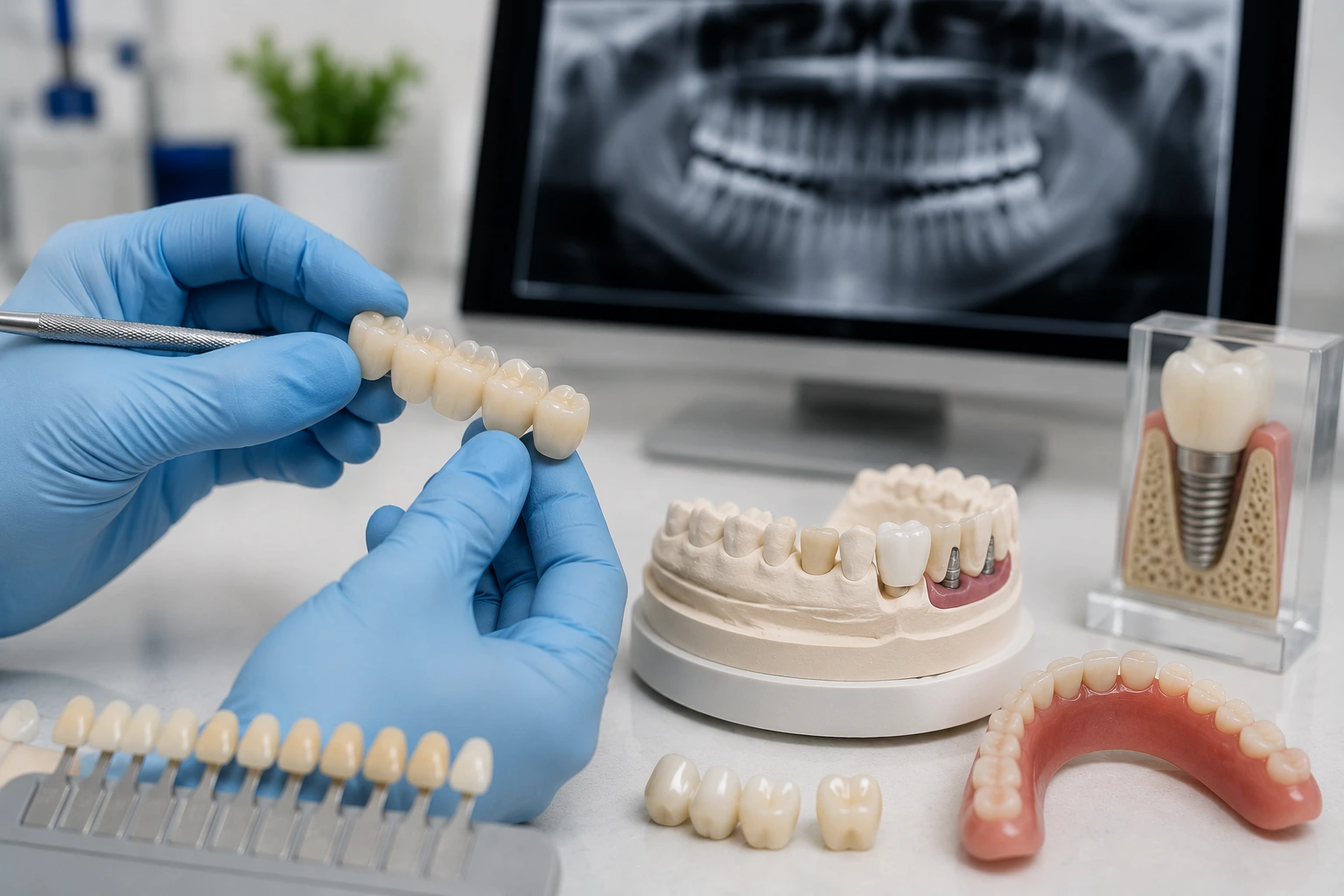
Dental Prosthetics
Dental Prosthetics
Personalized restorative solutions designed to rebuild missing, worn, or heavily damaged teeth with both function and aesthetics in mind.
Overview
Restorative solutions that support chewing comfort and smile aesthetics
Dental prosthetics are restorative treatments planned to replace missing teeth, strengthen weakened teeth, or improve the appearance of the smile. Prosthetic dentistry does not only mean removable dentures. Fixed crowns, bridges, implant-supported prosthetics, zirconium restorations, and removable dentures can all be part of this field. The goal is to create a tooth structure that fits the patient’s mouth, looks natural, feels comfortable, and gives confidence in daily life.
Suitability
Who is it suitable for?
People with one or more missing teeth
Patients with broken, worn, or heavily damaged teeth
Those who are not satisfied with old crowns, bridges, or dentures
Patients who have difficulty chewing or have started chewing mostly on one side
People with aesthetic concerns about tooth shape, color, or alignment
Patients who need implant-supported restorations after implant treatment
Those who use removable dentures but want a more comfortable or more stable option
People looking for a functional and aesthetic restoration planned specifically for their mouth
Treatment Process
How does prosthetic treatment work?
Evaluation of oral structure
The condition of the teeth, missing tooth areas, gum health, bite relationship, and chewing function are evaluated together.
Determining the need
The most suitable option is identified, such as a fixed bridge, crown, implant-supported prosthesis, zirconium restoration, or removable denture.
Aesthetic and functional planning
Tooth shade, shape, facial harmony, speech comfort, and chewing balance are considered when creating a personalized plan.
Impressions and try-in stages
Measurements are taken according to the mouth structure. Try-in appointments may be used to check fit, bite, and appearance.
Preparation of the restoration
The planned prosthesis or restoration is prepared through a laboratory process. Material selection depends on aesthetic goals, durability needs, and the function of the area.
Placement and fit control
The prepared restoration is placed in the mouth. Bite, contact points, speech comfort, and aesthetic appearance are checked.
Adaptation and care guidance
The adaptation process is followed. Cleaning, usage, and regular check-up recommendations are explained to the patient.
Benefits
Benefits of dental prosthetics
Restores missing tooth spaces both aesthetically and functionally.
Can improve chewing comfort and eating ability.
May help reduce some speech difficulties caused by missing teeth.
Can improve facial support and smile appearance.
Helps strengthen worn or weakened teeth.
Provides a more natural and harmonious appearance when planned individually.
Can create fixed and more comfortable solutions when combined with implant treatment.
Allows old, uncomfortable, or aesthetically unsatisfying restorations to be renewed.
Q / A
Frequently asked questions
Does dental prosthetics only mean removable dentures?
No. Dental prosthetics can include fixed crowns, bridges, implant-supported prosthetics, zirconium restorations, and removable dentures. The suitable option depends on the mouth structure and the type of tooth loss.
Will prosthetic teeth look natural?
With proper shade, shape, and measurement planning, prosthetic teeth can look harmonious with natural teeth. The aesthetic result is planned by considering material choice, gum structure, and facial harmony.
Is it difficult to get used to prosthetic teeth?
Fixed restorations are usually easier to adapt to. With removable dentures, there may be a feeling of fullness, speech changes, or chewing adjustment in the first days. Regular use and follow-up adjustments help the adaptation process.
Is a fixed prosthesis better than a removable denture?
It depends on the patient’s mouth structure, bone support, tooth loss pattern, and expectations. Fixed options may be more comfortable in suitable patients, but removable dentures may be the better choice in some cases.
What is an implant-supported prosthesis?
An implant-supported prosthesis is a restoration supported by implants placed in the jawbone. In suitable patients, this option can provide a more stable and comfortable use.
How should prosthetic teeth be cared for?
For fixed prosthetics, regular brushing, interdental cleaning, and dental check-ups are important. For removable dentures, daily cleaning, nighttime use, and storage should follow the dentist’s instructions.
Can my old prosthesis be renewed?
Yes. If an old prosthesis has lost its fit, causes discomfort, looks unaesthetic, is broken, or affects chewing, it can be evaluated and replaced with a more suitable restoration.