
Oral & Maxillofacial Surgery
Oral & Maxillofacial Surgery
Advanced dental procedures planned for tooth extractions, impacted teeth, jaw-related concerns, and oral health problems that require surgical care.
Overview
A safe, controlled, and comfortable approach to surgical dental care
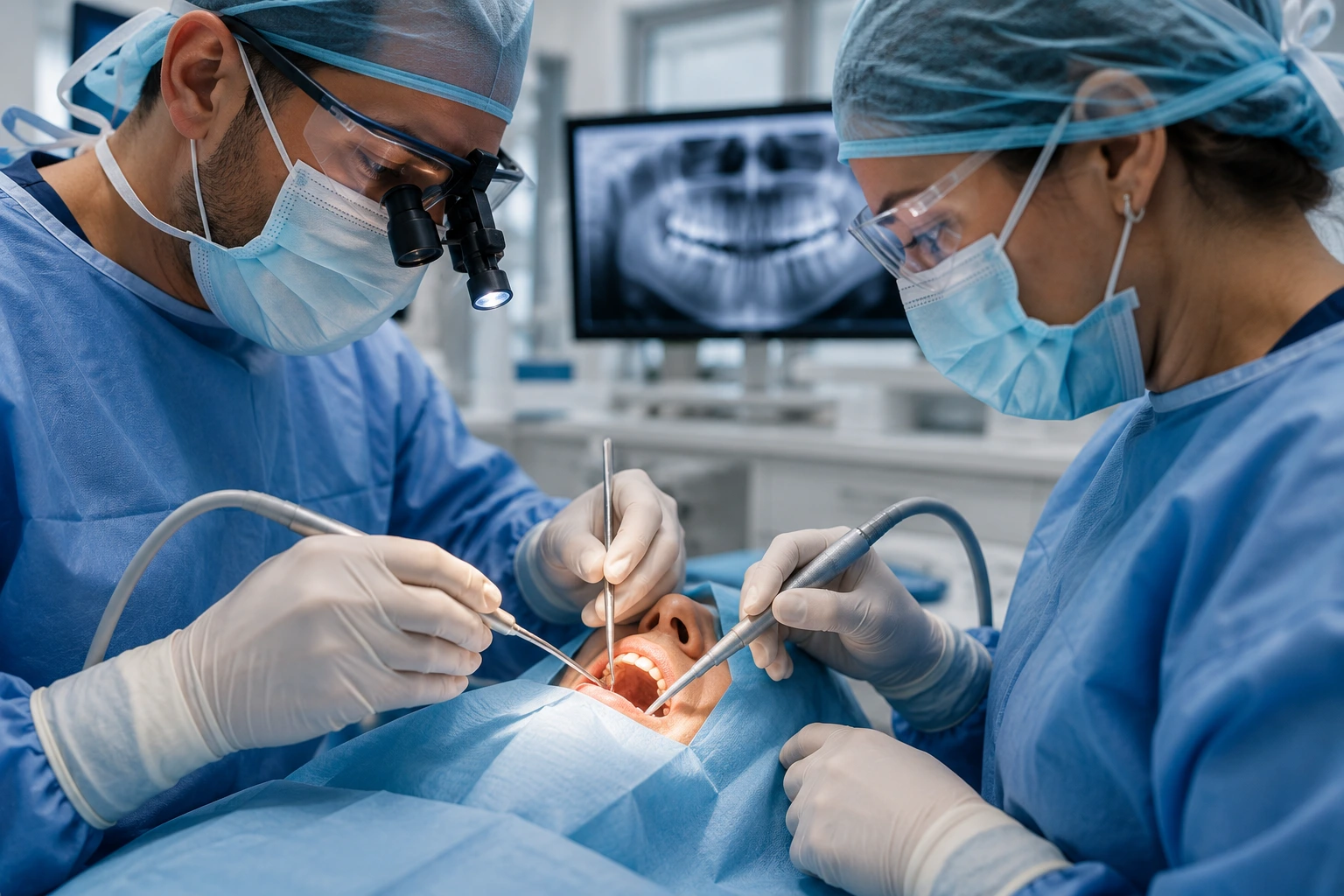
Oral and maxillofacial surgery covers tooth extractions, impacted wisdom teeth, jawbone-related problems, cyst-like formations, implant preparation, and more advanced surgical procedures. The word surgery can naturally make patients feel nervous, so the process is not only about the procedure itself. Clear explanation, proper imaging, patient comfort, and careful healing follow-up are all important parts of treatment. The goal is to solve the problem in a controlled way and support long-term oral health.
Suitability
Who is it suitable for?
People with impacted or partially impacted wisdom teeth
Patients who need extraction of teeth that are decayed, broken, or cannot be preserved
Those experiencing pain, swelling, infection, or recurring inflammation in the mouth
Patients who need jawbone evaluation or surgical preparation before implant treatment
People who need monitoring or treatment for cysts, lesions, or similar formations in the jawbone
Patients with gum, bone, or oral tissue conditions that require surgical intervention
Those who need evaluation for jaw structure, bite-related issues, or trauma-related oral problems
Treatment Process
How does the surgical process work?
Initial examination and listening to concerns
The patient’s symptoms such as pain, swelling, sensitivity, chewing difficulty, or aesthetic concerns are discussed. The problem area is then examined inside the mouth.
X-ray or tomography assessment
The tooth roots, relation to nerves, bone condition, and surrounding tissues are evaluated with imaging. This is especially important for impacted teeth and implant planning.
Treatment explanation
The procedure, expected healing period, aftercare instructions, and possible alternatives are explained in a clear and simple way.
Local anesthesia and preparation
Before the surgical procedure, the area is numbed. The aim is to reduce pain during the procedure and help the patient feel more comfortable.
Surgical procedure
Depending on the treatment plan, tooth extraction, impacted tooth surgery, cyst removal, bone contouring, or another surgical intervention is performed.
Healing period
Mild swelling, sensitivity, or pressure may occur after the procedure. Following the dentist’s instructions helps the healing period progress more comfortably.
Follow-up and control
When needed, a follow-up appointment is planned. Stitch removal, healing assessment, or planning of the next treatment step may be done at this stage.
Benefits
Benefits of surgical dental treatment
Helps treat problematic teeth that cause pain or infection in a controlled way.
Can reduce the risk of impacted teeth damaging nearby teeth or gums.
Supports preparation of the mouth and jaw structure for advanced treatments such as implants.
May prevent recurring swelling, inflammation, or pressure-related discomfort.
Proper planning makes surgical treatment safer and more predictable.
Contributes to long-term oral health protection.
Can improve chewing, speaking, and daily comfort.
Q / A
Frequently asked questions
Are oral surgery procedures painful?
Most surgical procedures are performed under local anesthesia, so pain is not expected during the procedure. Mild pain, swelling, or sensitivity may occur afterward and is usually managed with the dentist’s recommendations.
Does every wisdom tooth need to be removed?
No. Whether a wisdom tooth should be removed depends on its position, decay or infection status, whether it presses on nearby teeth, and whether it causes symptoms.
Is impacted tooth surgery difficult?
The difficulty depends on the position of the tooth, root structure, and relation to surrounding tissues. That is why imaging and careful planning before the procedure are important.
Is swelling normal after surgery?
Yes, mild or moderate swelling can occur after some surgical procedures. It is usually a natural part of healing. Following the dentist’s aftercare instructions is important.
When can I return to normal eating?
Soft, warm, and non-irritating foods may be recommended during the first hours and days. Hard, very hot, spicy, or pressure-causing foods may need to be avoided for a while.
Do stitches always need to be removed?
It depends on the type of stitch used. Some stitches dissolve on their own, while others are removed during a follow-up visit. Your dentist will explain which type was used.
What should I be careful about after surgery?
It is important not to disturb the area, to use prescribed medication as directed, to avoid smoking, to maintain oral hygiene carefully, and to attend follow-up appointments if scheduled.