
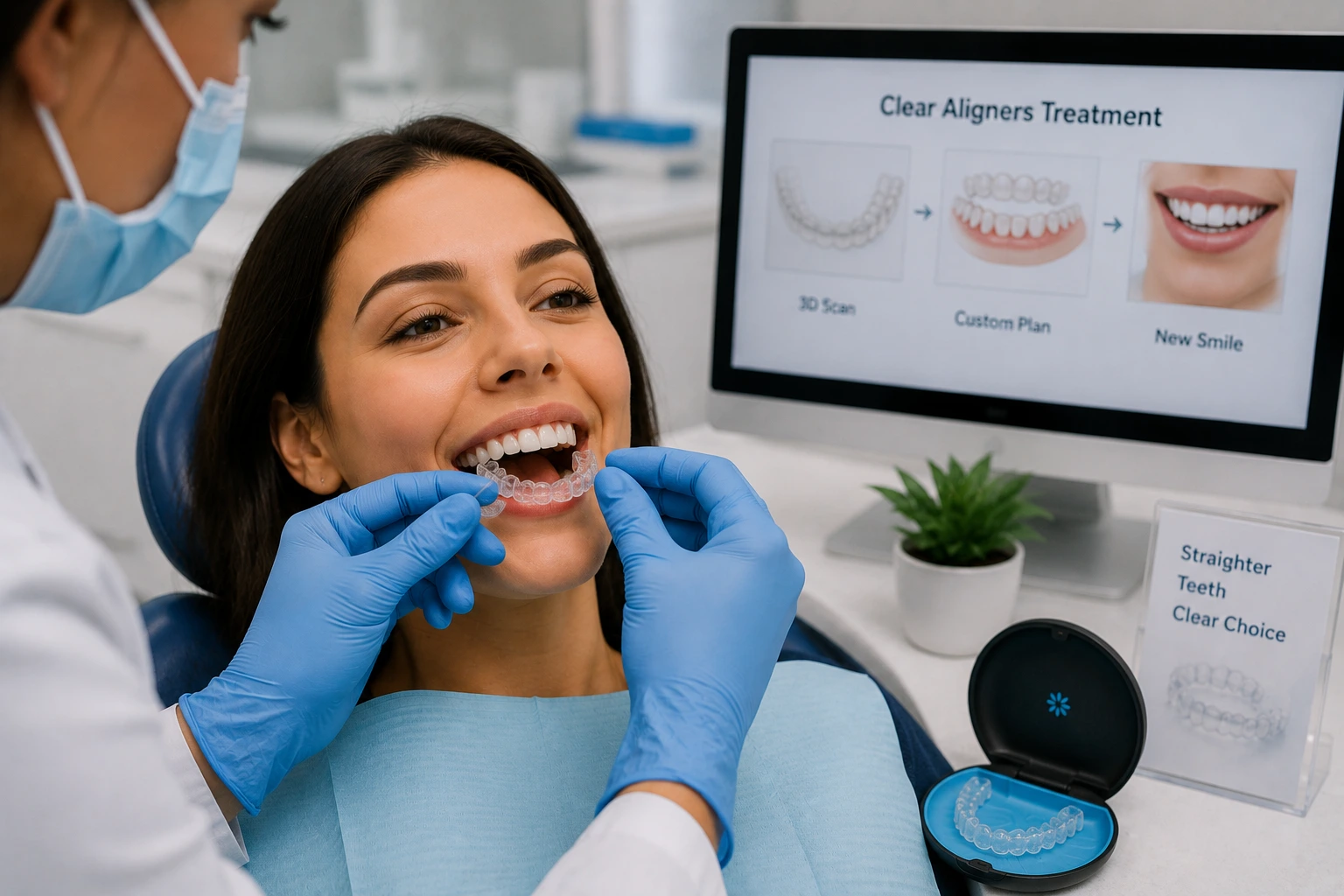
Orthodontics
Orthodontics
A treatment field focused on tooth alignment, bite problems, and jaw relationships to create a more balanced, healthy, and well-organized oral structure.
Overview
Planned treatment for straighter teeth and a balanced bite
Orthodontics deals with crowded teeth, gaps, bite problems, and jaw relationship irregularities. The goal is not only to create a more aesthetic smile. Better tooth positioning can also support chewing function, make oral hygiene easier, and help protect long-term dental health. Orthodontic treatment can begin in childhood, but it can also be planned for adults. For every patient, the process is shaped according to tooth structure, jaw development, age, expectations, and the treatment method used.
Suitability
Who is it suitable for?
People with crowded or irregularly aligned teeth
Patients with noticeable gaps between teeth
Those whose upper and lower teeth do not close properly
Patients who feel discomfort while chewing or notice bite imbalance
Children and teenagers whose jaw development needs monitoring
Adults who want to improve smile aesthetics through better tooth alignment
People whose crowded teeth make proper cleaning difficult
Patients who want to evaluate orthodontic options such as clear aligners or braces
Treatment Process
How does orthodontic treatment work?
Initial examination and bite analysis
Tooth alignment, upper-lower jaw relationship, bite pattern, facial proportions, and smile line are evaluated together.
Imaging and measurements
X-rays, photographs, digital scans, or impressions are used to analyze the teeth and jaw structure in detail.
Choosing the treatment option
Depending on the patient’s needs, metal braces, aesthetic braces, clear aligners, or other orthodontic approaches may be considered.
Personalized treatment planning
The planned tooth movements, estimated treatment duration, control intervals, and expected result are explained to the patient.
Starting treatment
Depending on the chosen method, braces are placed or clear aligners are delivered. Usage and care instructions are explained.
Regular follow-ups
Tooth movements are monitored throughout treatment. Wire activations, aligner changes, or minor adjustments are made when needed.
Final alignment and bite check
In the final stage, tooth alignment, bite balance, and smile aesthetics are carefully reviewed.
Retention phase
Retainers or retention aligners may be used to help preserve the new tooth positions. This phase is important for long-term stability.
Benefits
Benefits of orthodontics
Helps teeth look straighter and more aesthetic.
Can make crowded teeth easier to clean and support oral hygiene.
Contributes to correction of bite problems.
May help chewing function become more balanced.
Can reduce uneven tooth wear or pressure-related issues in some cases.
Improves smile aesthetics in a natural and long-lasting way.
Allows jaw development to be monitored properly in children.
Options such as clear aligners may offer a more comfortable and aesthetic treatment experience for some patients.
Q / A
Frequently asked questions
Is orthodontic treatment only for children?
No. Orthodontic treatment can be applied to children, teenagers, and adults. In adults, treatment can be planned as long as tooth and gum health are suitable.
Is braces treatment painful?
After braces are placed or wires are activated, pressure and sensitivity may be felt for a few days. This is usually temporary and related to the beginning of tooth movement.
How long does orthodontic treatment take?
Treatment duration depends on the level of crowding, bite problem, method used, and the patient’s cooperation. Simple cases may take less time, while more comprehensive treatments may take longer.
Are clear aligners better than braces?
It depends on the tooth structure, treatment need, and patient expectations. Clear aligners can be an aesthetic and comfortable option for some patients, but they may not be suitable for every case.
Can teeth shift back after orthodontic treatment?
If the retention phase is neglected, teeth may tend to move back over time. That is why using retainers or retention aligners as recommended is important.
What should I avoid eating during braces treatment?
With braces, very hard, sticky, or bracket-damaging foods should be avoided. With clear aligners, the aligners are usually removed during meals and worn again after cleaning the teeth.
Is it difficult to clean teeth with braces?
Cleaning requires more care because of the brackets. Orthodontic brushes, interdental brushes, and suitable hygiene tools can help maintain oral cleanliness.
Can orthodontics be planned together with smile design?
Yes. In some patients, tooth alignment is corrected first with orthodontics, and then smile design can be completed with whitening, bonding, or aesthetic restorations.