
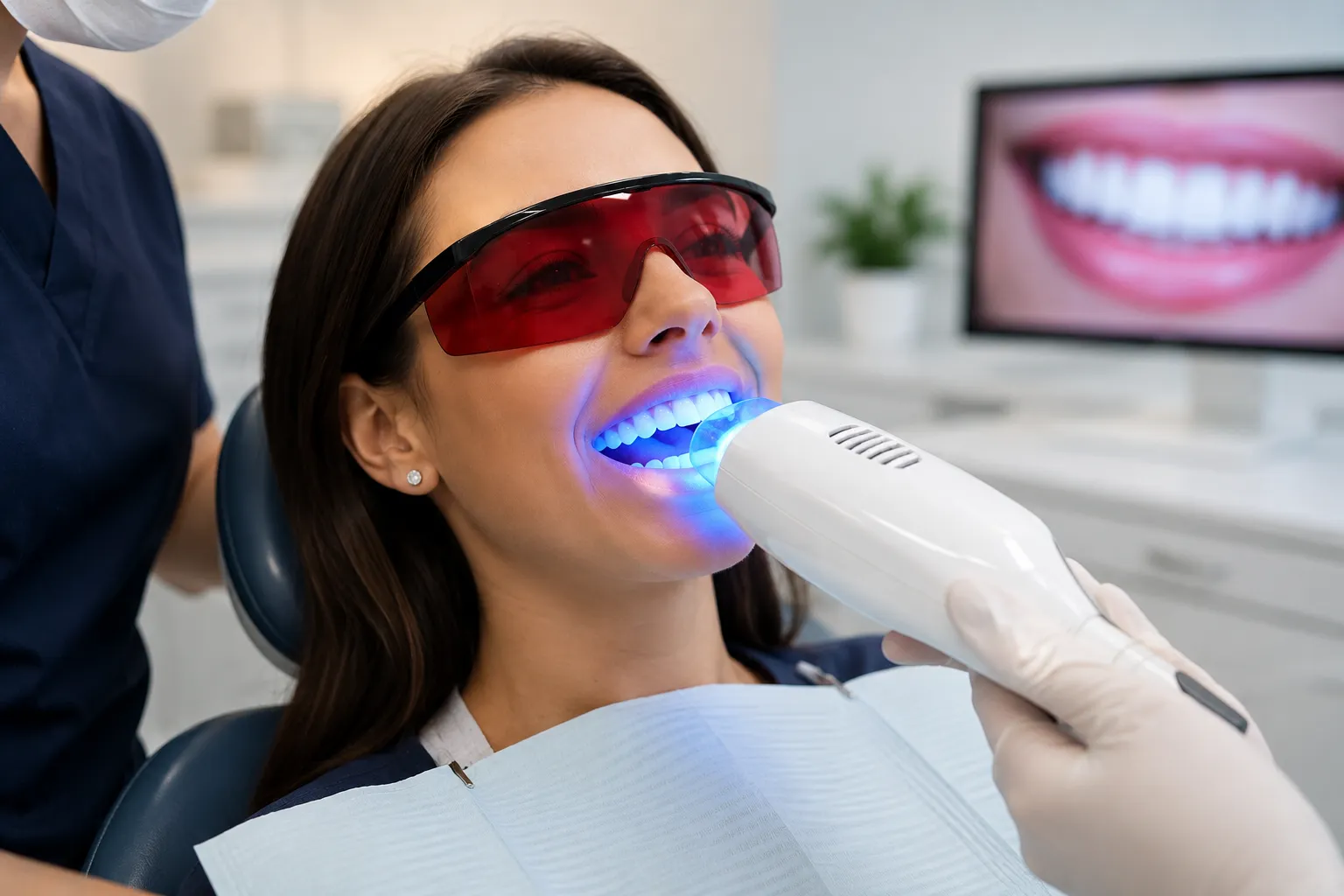
Teeth Whitening
Teeth Whitening
An aesthetic treatment that helps reduce discoloration and creates a brighter, cleaner, and more vibrant smile appearance.
Overview
Professional whitening for a brighter and fresher smile
Teeth whitening is an aesthetic treatment designed to reduce discoloration caused by tea, coffee, smoking, colored foods, aging, or other factors. When professionally planned, the goal is not an artificial white look, but a cleaner, brighter, and more natural shade that suits the person’s smile. Before whitening, tooth and gum health are evaluated so the treatment can be performed in a controlled, safer, and more personalized way.
Suitability
Who is it suitable for?
People who feel their teeth have become darker or more yellow over time
Patients with stains caused by tea, coffee, smoking, or colored foods
Those who want a brighter smile before a special event, photo shoot, wedding, or important period
People who want a cleaner and naturally brighter tooth appearance
Patients who want to improve smile aesthetics after professional dental cleaning
People whose tooth and gum health are suitable for whitening treatment
Treatment Process
How does the whitening process work?
Examination and shade assessment
The current tooth shade, cause of discoloration, gum health, and any sensitivity concerns are evaluated.
Cleaning and preparation
If needed, professional cleaning or removal of surface stains may be performed before whitening. This helps create a more even result.
Gum protection
A protective barrier is applied to help protect the gums and keep the treatment area controlled during the procedure.
Application of whitening gel
Professional whitening gel is applied to the tooth surfaces. Depending on the method, the treatment may be completed in stages.
Shade control
After the procedure, the tooth shade is checked again. The achieved brightness and natural tone change are reviewed.
Aftercare guidance
The dentist explains which foods, drinks, and habits to avoid in the first days and how to maintain the result.
Benefits
Benefits of teeth whitening
Helps the smile look cleaner, brighter, and more vibrant.
Can reduce the appearance of yellowing and discoloration.
May provide a noticeable aesthetic improvement in a short time.
When properly planned, it brightens the natural tooth shade without creating an artificial look.
Supports smile aesthetics and may help the person feel more confident.
Can create a more effective result when combined with regular cleaning and oral care.
Q / A
Frequently asked questions
Does teeth whitening damage the teeth?
When performed professionally after evaluating tooth and gum health, whitening is generally considered safe. The important point is that it should be planned by a dentist rather than done with uncontrolled products.
Is teeth whitening painful?
Pain is usually not expected during the procedure. Some patients may experience temporary sensitivity, which is generally short-lived and can be reduced with proper aftercare.
How white will my teeth become?
The result depends on the natural tooth shade, the reason for discoloration, and the tooth structure. The goal is always a natural brightness that fits the person’s smile and facial expression.
Is the whitening result permanent?
Whitening results are not permanent, but they can last longer with good oral hygiene, regular check-ups, and reducing habits that cause staining.
Do fillings, crowns, or porcelain teeth whiten too?
Whitening works on natural tooth structure. Fillings, crowns, zirconium, or porcelain restorations do not change color with whitening, so existing restorations should be evaluated before treatment.
What should I avoid after whitening?
In the first days, it may be recommended to avoid tea, coffee, red wine, smoking, and strongly colored foods. Regular brushing and dental check-ups help maintain the result.